
THE SECRETS of THE OCEAN’S MICROBIOME
After sequencing the human genome and embarking on a reimagining of his Institute and future research, J. Craig Venter, Ph.D. set upon a project combining his two loves: sailing and science. In 2004, after a successful pilot project where the DNA was collected and sequenced at the Bermuda Atlantic Time Series site, Dr. Venter and a team from his Institute launched the Sorcerer II Global Ocean Sampling (GOS) Expedition.
Inspired by 19th century sea voyages like Charles Darwin’s on the H.M.S. Beagle and Captain George Nares on the H.M.S. Challenger, the Sorcerer II circumnavigated the globe for more than two years, covering a staggering 32,000 nautical miles, visiting 23 different countries and island groups on four continents. The expedition continued for fifteen years, collecting tens of millions of marine microbes found in the global oceans and in the process has changed our understanding of this critical resource that sustains us.
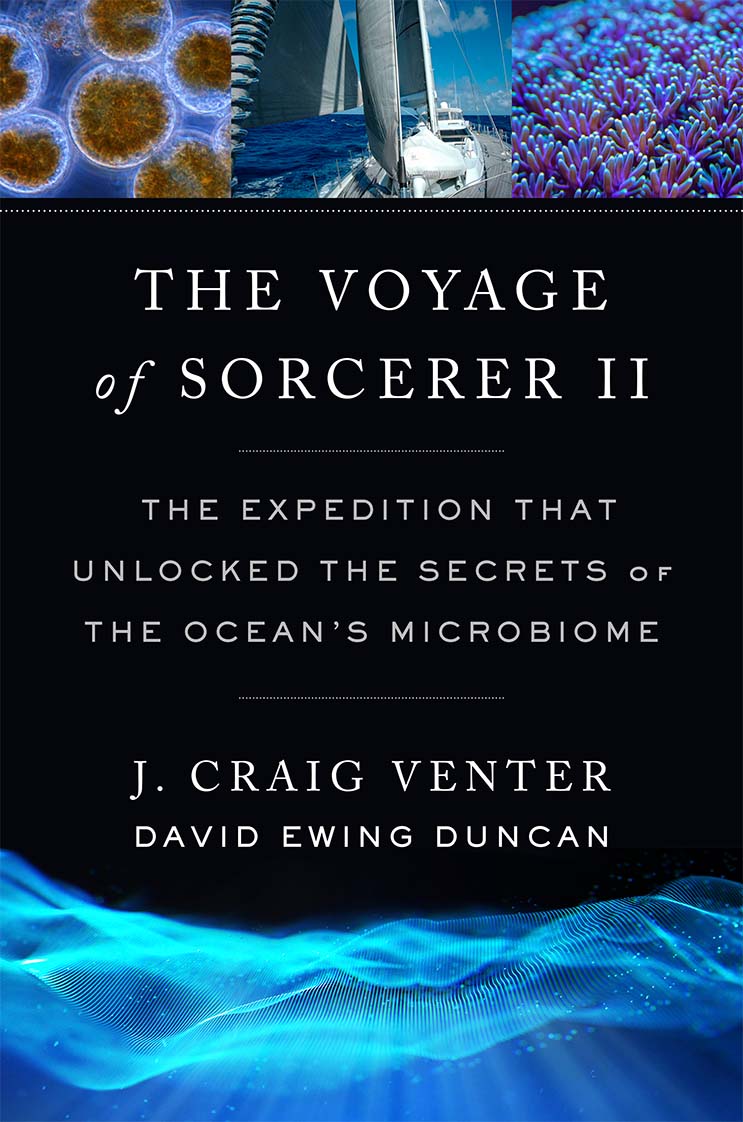
In “The Voyage of Sorcerer II,” Dr. Venter and science writer David Ewing Duncan tell the remarkable story of these expeditions and of the momentous discoveries that ensued: of plant-like bacteria that get their energy from the sun, proteins that metabolize vast amounts of hydrogen, and microbes whose genes shield them from ultraviolet light. The result was a massive library of millions of unknown genes, thousands of unseen protein families, and new lineages of bacteria that revealed the unimaginable complexity of life on earth. Yet despite this exquisite diversity, Venter encountered sobering reminders of how human activity is disturbing the delicate microbial ecosystem that nurtures life on earth. In the face of unprecedented climate change, Venter and Duncan show how we can harness microbial genomes to develop alternative sources of energy, food, and medicine that might ultimately avert our destruction.
A captivating story of exploration and discovery, “The Voyage of Sorcerer II” restores microbes to their rightful place as crucial partners in our evolutionary past and guides to our future.
After sequencing the human genome and embarking on a reimagining of his Institute and future research, J. Craig Venter, Ph.D. set upon a project combining his two loves: sailing and science. In 2004, after a successful pilot project where the DNA was collected and sequenced at the Bermuda Atlantic Time Series site, Dr. Venter and a team from his Institute launched the Sorcerer II Global Ocean Sampling (GOS) Expedition.
Inspired by 19th century sea voyages like Charles Darwin’s on the H.M.S. Beagle and Captain George Nares on the H.M.S. Challenger, the Sorcerer II circumnavigated the globe for more than two years, covering a staggering 32,000 nautical miles, visiting 23 different countries and island groups on four continents. The expedition continued for fifteen years, collecting tens of millions of marine microbes found in the global oceans and in the process has changed our understanding of this critical resource that sustains us.
In “The Voyage of Sorcerer II,” Dr. Venter and science writer David Ewing Duncan tell the remarkable story of these expeditions and of the momentous discoveries that ensued: of plant-like bacteria that get their energy from the sun, proteins that metabolize vast amounts of hydrogen, and microbes whose genes shield them from ultraviolet light. The result was a massive library of millions of unknown genes, thousands of unseen protein families, and new lineages of bacteria that revealed the unimaginable complexity of life on earth. Yet despite this exquisite diversity, Venter encountered sobering reminders of how human activity is disturbing the delicate microbial ecosystem that nurtures life on earth. In the face of unprecedented climate change, Venter and Duncan show how we can harness microbial genomes to develop alternative sources of energy, food, and medicine that might ultimately avert our destruction.
A captivating story of exploration and discovery, “The Voyage of Sorcerer II” restores microbes to their rightful place as crucial partners in our evolutionary past and guides to our future.
After sequencing the human genome and embarking on a reimagining of his Institute and future research, J. Craig Venter, Ph.D. set upon a project combining his two loves: sailing and science. In 2004, after a successful pilot project where the DNA was collected and sequenced at the Bermuda Atlantic Time Series site, Dr. Venter and a team from his Institute launched the Sorcerer II Global Ocean Sampling (GOS) Expedition.
Inspired by 19th century sea voyages like Charles Darwin’s on the H.M.S. Beagle and Captain George Nares on the H.M.S. Challenger, the Sorcerer II circumnavigated the globe for more than two years, covering a staggering 32,000 nautical miles, visiting 23 different countries and island groups on four continents. The expedition continued for fifteen years, collecting tens of millions of marine microbes found in the global oceans and in the process has changed our understanding of this critical resource that sustains us.
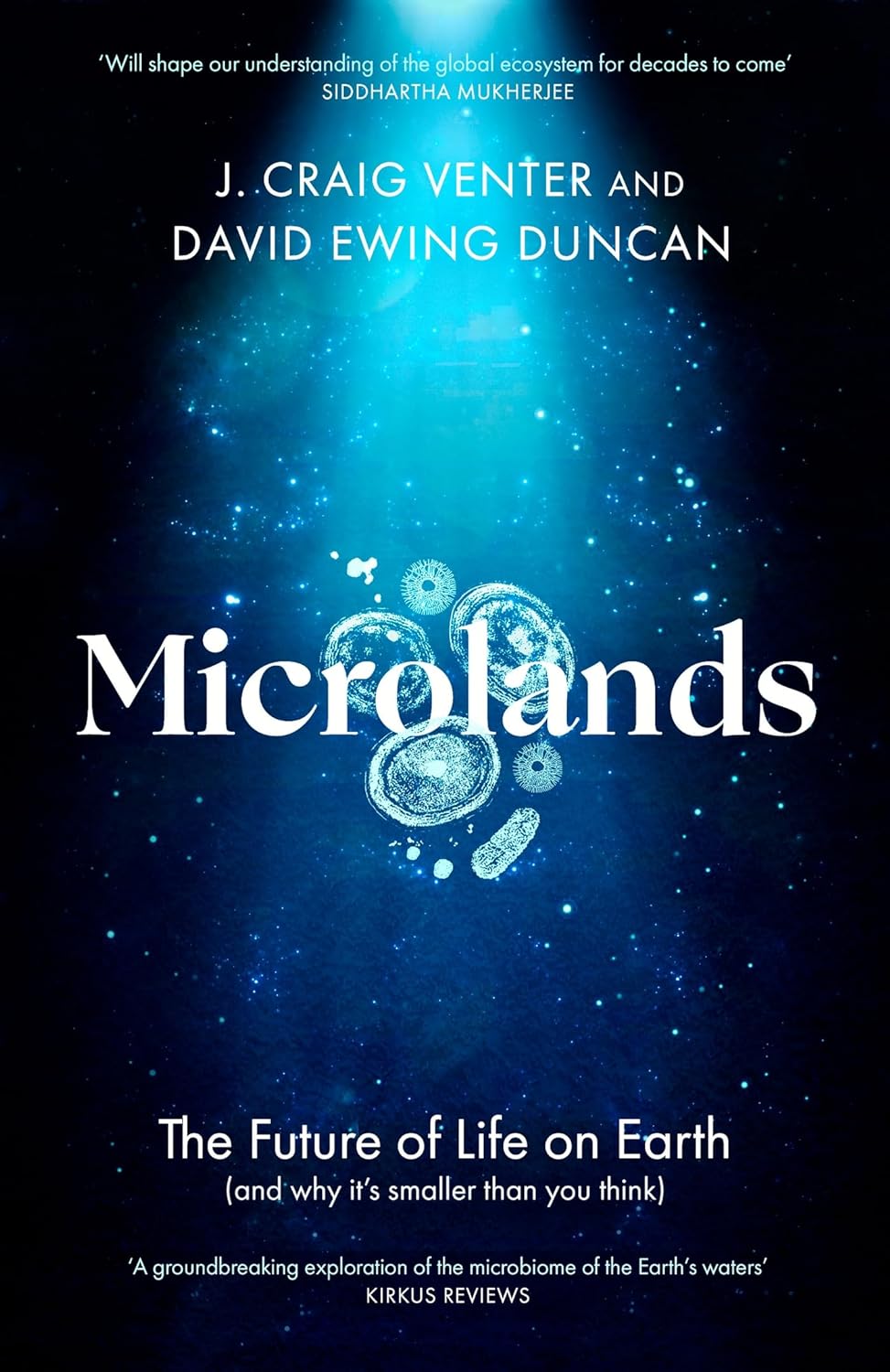
In “Microlands,” Dr. Venter and science writer David Ewing Duncan tell the remarkable story of these expeditions and of the momentous discoveries that ensued: of plant-like bacteria that get their energy from the sun, proteins that metabolize vast amounts of hydrogen, and microbes whose genes shield them from ultraviolet light. The result was a massive library of millions of unknown genes, thousands of unseen protein families, and new lineages of bacteria that revealed the unimaginable complexity of life on earth. Yet despite this exquisite diversity, Venter encountered sobering reminders of how human activity is disturbing the delicate microbial ecosystem that nurtures life on earth. In the face of unprecedented climate change, Venter and Duncan show how we can harness microbial genomes to develop alternative sources of energy, food, and medicine that might ultimately avert our destruction.
A captivating story of exploration and discovery, “Microlands” restores microbes to their rightful place as crucial partners in our evolutionary past and guides to our future.
After sequencing the human genome and embarking on a reimagining of his Institute and future research, J. Craig Venter, Ph.D. set upon a project combining his two loves: sailing and science. In 2004, after a successful pilot project where the DNA was collected and sequenced at the Bermuda Atlantic Time Series site, Dr. Venter and a team from his Institute launched the Sorcerer II Global Ocean Sampling (GOS) Expedition.
Inspired by 19th century sea voyages like Charles Darwin’s on the H.M.S. Beagle and Captain George Nares on the H.M.S. Challenger, the Sorcerer II circumnavigated the globe for more than two years, covering a staggering 32,000 nautical miles, visiting 23 different countries and island groups on four continents. The expedition continued for fifteen years, collecting tens of millions of marine microbes found in the global oceans and in the process has changed our understanding of this critical resource that sustains us.
In “Microlands,” Dr. Venter and science writer David Ewing Duncan tell the remarkable story of these expeditions and of the momentous discoveries that ensued: of plant-like bacteria that get their energy from the sun, proteins that metabolize vast amounts of hydrogen, and microbes whose genes shield them from ultraviolet light. The result was a massive library of millions of unknown genes, thousands of unseen protein families, and new lineages of bacteria that revealed the unimaginable complexity of life on earth. Yet despite this exquisite diversity, Venter encountered sobering reminders of how human activity is disturbing the delicate microbial ecosystem that nurtures life on earth. In the face of unprecedented climate change, Venter and Duncan show how we can harness microbial genomes to develop alternative sources of energy, food, and medicine that might ultimately avert our destruction.
A captivating story of exploration and discovery, “Microlands” restores microbes to their rightful place as crucial partners in our evolutionary past and guides to our future.